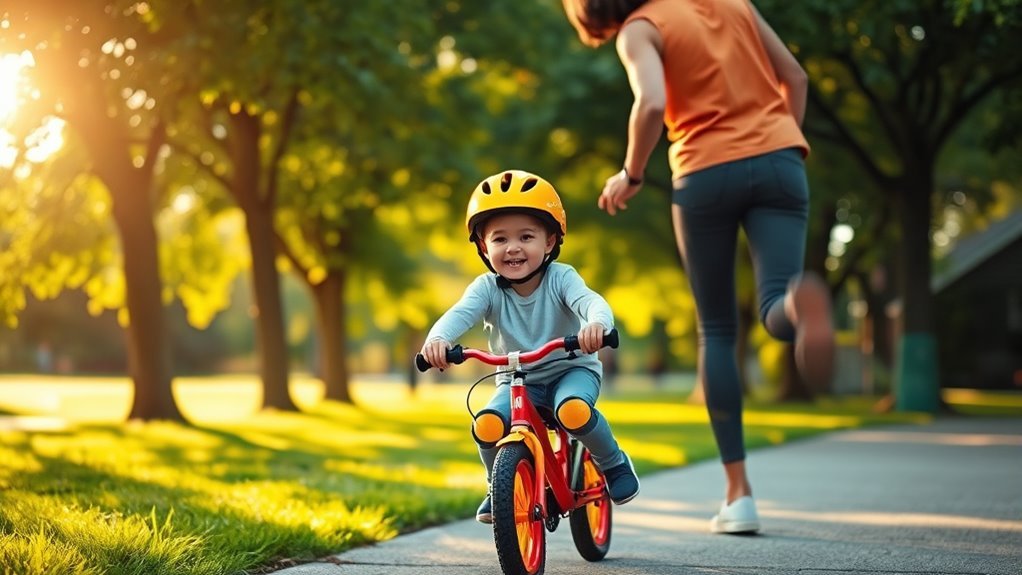
Teach Your Kid to Ride a Bike in 5 Easy Steps
Choose a bike that fits your child, along with a helmet and pads for safety. Starting with the right gear is super important to keep your little one protected and comfortable.
Begin by removing the pedals or using a balance bike, so your child can focus on balancing and steering first. This helps build confidence without worrying about pedaling just yet.
Encourage them to steer independently in open, flat spaces. Praise their progress often—it really motivates them to keep trying and having fun.
Pick easy, smooth terrain to build their confidence without fear. When they feel safe, they’re more likely to enjoy the learning process.
Step back and cheer from a distance, letting your child develop skills and resilience on their own.
Keep going, and soon you’ll discover tips that make learning even smoother and more fun!
Key Takeaways
– Choose a properly fitting, lightweight bike with safety gear like a helmet, kneepads, and elbow pads.
This keeps your kid safe and comfy while learning to ride.
– Remove pedals or use a balance bike to focus on learning balance and steering first.
It’s easier to master these basics before pedaling comes into play.
– Practice in open, flat, obstacle-free areas to build confidence and control gradually.
Starting in a calm spot helps your child feel less overwhelmed.
– Encourage independent steering by gently releasing handlebar grip and praising progress.
Let them take the lead while you offer support from close by.
– Cheer from a distance, give space for problem-solving, and celebrate small successes to motivate.
Positive vibes really boost their confidence and make learning fun!
Choose the Right Bike and Safety Gear
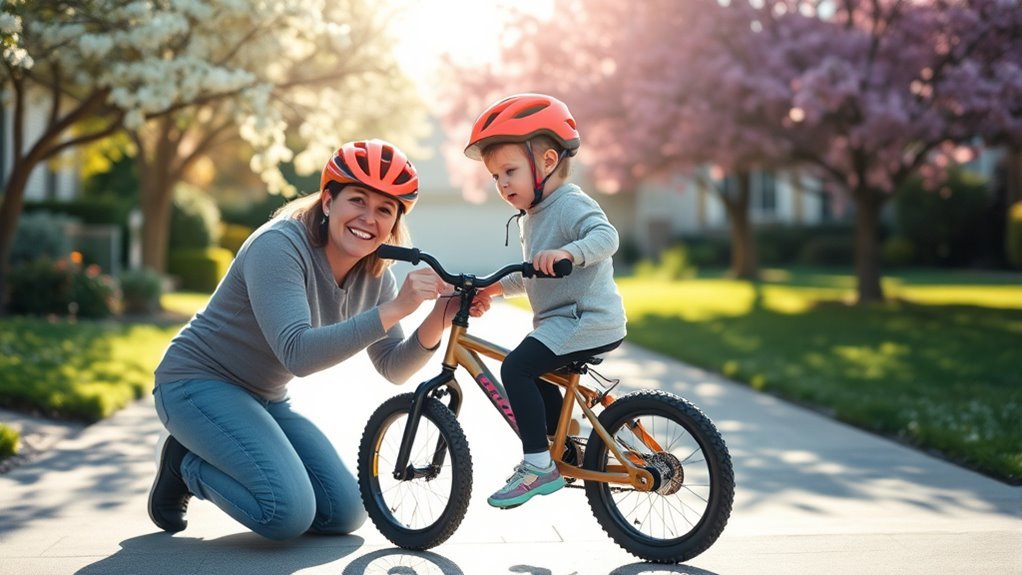
Before your child hops on their bike, make sure you choose one that fits them well. Also, equip them with the right safety gear.
To check if a bike fits your child, have them stand over the top tube with both feet flat on the ground. This way, you know the bike size is just right.
Have your child stand over the top tube with feet flat to ensure the bike fits perfectly.
Adjust the seat height so their feet can reach the ground comfortably. Set the handlebars to promote easy control and comfort.
A properly fitting helmet is a must. Don’t forget protective gear like kneepads and elbow pads to guard against falls.
For beginners, a lightweight balance bike or a bike with training wheels is a good choice. The training wheels can be removed as they gain confidence.
Avoid heavy bikes and go for ones with hand brakes and a freewheel for easier handling. By making sure the bike fits well and your child wears the right gear, you’re setting the stage for a safe and fun ride.
Teach Kids to Ride by Removing Pedals
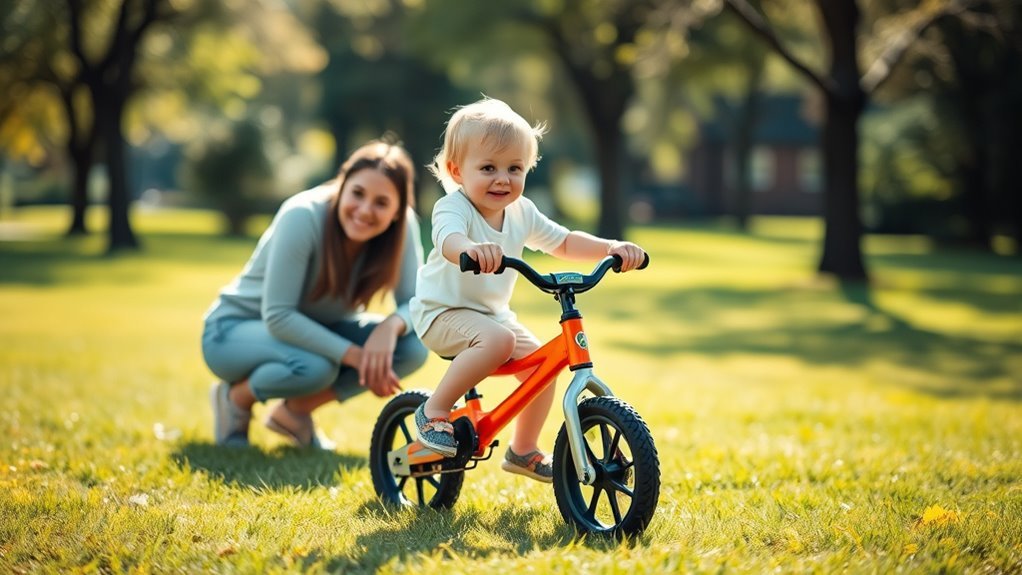
How can you help your child master balance on a bike without the confusion of pedaling? Start by using a balance bike or removing pedals from a regular bike.
With pedals removed, your child focuses solely on balance and steering, scooting along with their feet on the ground. This pedal-free bike approach builds confidence and essential skill development for independent riding.
As your child grows comfortable balancing, reattaching pedals helps ease the transition to full riding.
| Step | Focus | Result |
|---|---|---|
| Pedals Removed | Balance & steering | Scooting & control |
| Pedal-Free Bike | Confidence building | Skill development |
| Transition | Add pedals back | Independent riding |
This method simplifies learning to ride, making it less overwhelming and more enjoyable for both of you.
Removing pedals helps your child master balance before pedaling, speeding up the learning to ride process.
Encourage Independent Steering and Balance
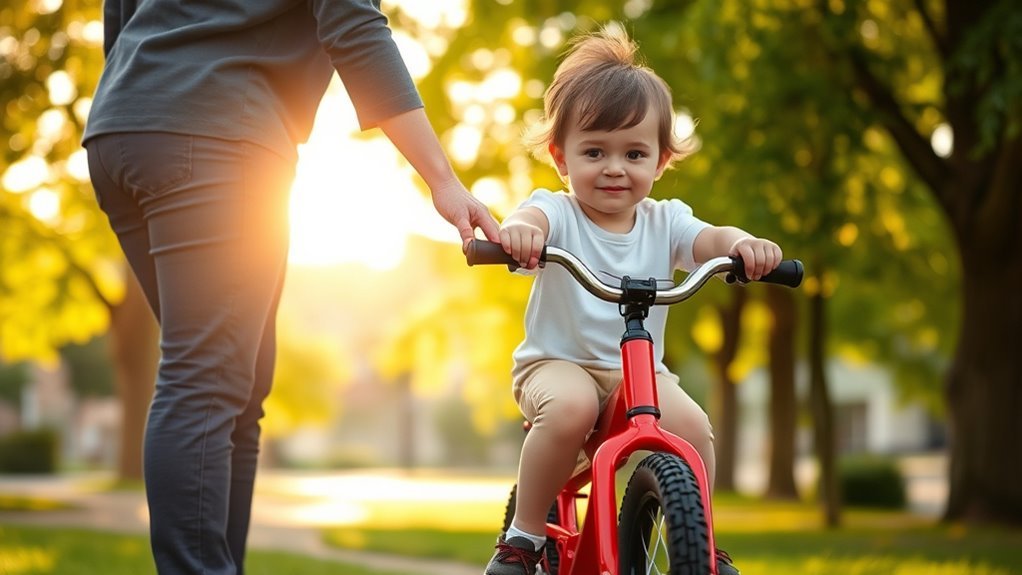
Once your child feels steady balancing without pedals, it’s time to help them steer confidently on their own. Encourage independence by gradually letting go of the handlebars, allowing your child to develop control and build confidence in their steering.
Practice in open, obstacle-free spaces so they can focus on balance and learn to navigate smoothly. Remind them to look ahead, which improves directional control and helps maintain steady balance. Avoid over-holding the handlebars, as this can hinder their ability to steer naturally.
To encourage independent steering and balance, try these tips:
- Gradually release your grip on the handlebars to boost confidence.
- Choose open areas for uninterrupted practice.
- Encourage your child to focus on the path ahead.
- Use fun activities like weaving through cones to develop bike handling.
- Praise their progress to reinforce their control and independence.
With consistent practice, your child will gain the skills to steer and balance confidently on their own. It just takes a little time and patience!
Pick Easy Terrain to Build Confidence
Where should your child practice riding to build confidence quickly? Start by choosing a practice location with flat terrain and smooth surfaces like paved areas, such as empty parking lots or quiet blacktop spaces. These open spaces create a safe environment free from traffic and obstacles, allowing your beginner to focus on balance and pedaling without distractions.
Picking familiar terrain helps your child concentrate on developing skills rather than worrying about unexpected bumps or rough patches that could cause falls. Avoid rough or uneven surfaces early on, as they make balancing harder and can shake confidence.
Slightly inclined terrain, like gentle hills, can also be helpful since it encourages momentum and makes pedaling easier without overwhelming your child. By selecting the right spot, you give your kid the best chance to build confidence quickly, making the learning process smoother and more enjoyable.
Give Them Space and Cheer Them On
Giving your child plenty of space while they practice riding is essential for building their independence and confidence. When you give them space, you allow them to develop balance and steering skills at their own pace.
Giving your child space while they practice helps build independence, confidence, and essential riding skills at their own pace.
It’s important to cheer them on from a supportive distance. This boosts their motivation and creates a positive environment that encourages learning.
You’ll notice how stepping back helps them solve problems and adapt. This strengthens their resilience throughout the learning process.
Celebrate small successes with cheers and applause to reinforce their efforts and keep their enthusiasm high.
Remember to:
- Give them space to explore and learn independently
- Cheer them on to build motivation and confidence
- Maintain a supportive distance to encourage problem-solving
- Celebrate small successes to foster a love of riding
- Create a positive environment that nurtures resilience
Frequently Asked Questions
What Is the Easiest Way to Teach a Child to Ride a Bike?
The easiest way to teach a child to ride a bike is by using a balance bike without pedals on flat, safe surfaces. You’ll help them build balance first, then gradually introduce pedaling for a smooth, confident ride.
It’s all about starting simple and making sure they feel steady before adding more skills. Once they get the hang of balancing, pedaling comes naturally. This way, the whole process feels fun and less frustrating for them.
How to Teach Your Kid to Ride a Bike in 5 Minutes?
Start by removing pedals or using a balance bike. Have your kid sit, push off, and glide with feet flat.
Support lightly at their waist, encouraging independent steering. Gradually reduce help as they gain balance and confidence.
You’ll see—they’ll be riding on their own before you know it! Just keep it fun and relaxed.
Can a 5 Year Old Learn How to Ride a Bike?
Yes, your 5-year-old can learn to ride a bike! Focus on balance and confidence, and make sure to use a properly sized bike.
Encourage practice with patience. With your support, they’ll likely master it in just a few weeks.
At What Age Is It Appropriate to Start Teaching a Child to Ride a Bike?
You can start teaching your child to ride a bike between ages 4 and 8. Around 65% of kids develop enough balance and coordination by then.
This makes it easier and more fun for them to learn confidently. So, don’t rush it—let them take their time!
Conclusion
Teaching your kid to ride a bike is a rewarding experience that builds confidence and independence. Did you know that nearly 70% of children learn to ride a bike by age 7?
By choosing the right gear, starting with balance before pedals, and cheering them on in easy terrain, you’ll make the process fun and stress-free.
Remember, patience and encouragement are your best tools—soon, they’ll be riding with joy and pride! Teaching your kid to ride a bike not only helps them develop physical skills but also boosts their self-esteem. With the right approach, like focusing on balance first and using supportive encouragement, your child will gain confidence quickly. Riding a bike opens up a world of adventure and independence for kids, making all the effort worthwhile. So, keep the experience positive and enjoyable, and watch your little one master bike riding in no time!