7 Facts About How Fast a 125cc Dirt Bike Can Go
You can expect a 125cc dirt bike to reach speeds between 45 and 60 mph. Two-stroke engines usually hit the higher end because they accelerate quicker and weigh less.
Four-strokes offer smoother torque but typically top out around 50 mph. Of course, your actual speed depends on factors like terrain, rider weight, and how well the bike is maintained.
Simple upgrades, like changing sprockets or improving the exhaust, can push your bike even faster. Keep exploring to find out how engine type, gearing, and modifications can really impact your ride’s performance.
Key Takeaways
- Most 125cc dirt bikes reach top speeds between 45 and 60 mph, with two-stroke models hitting up to 62 mph.
- Four-stroke 125cc engines prioritize torque and smoothness, typically topping out around 47 to 50 mph.
- Terrain, rider weight, and maintenance can reduce achievable speed by 10-15 mph from the bike’s top speed.
- Upgrading sprockets, exhaust, and air filters can increase top speed beyond 60 mph.
- Riders often upgrade from 125cc to 250cc bikes when seeking speeds above 70 mph and more challenging terrain performance.
What’s a 125cc Dirt Bike?
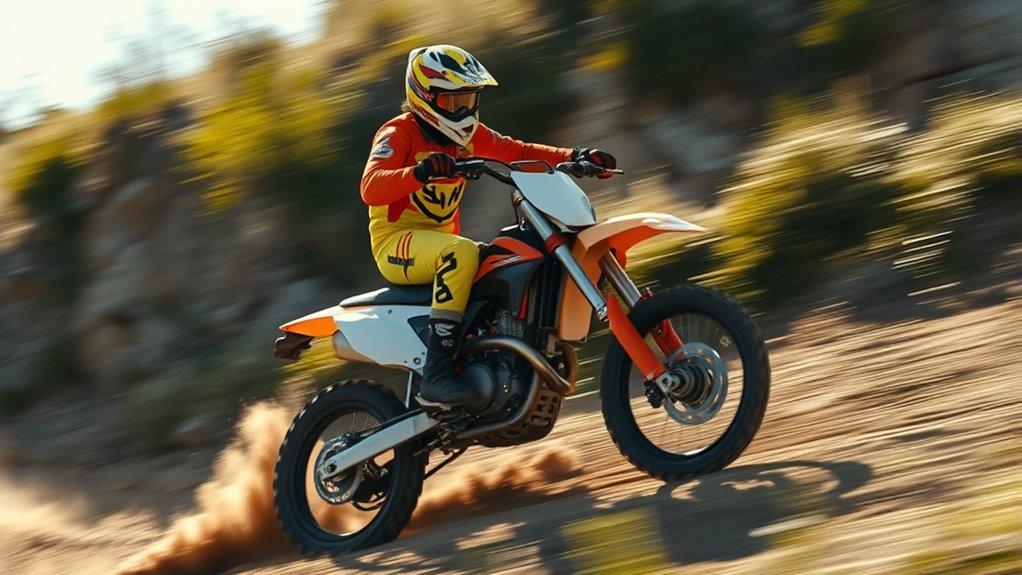
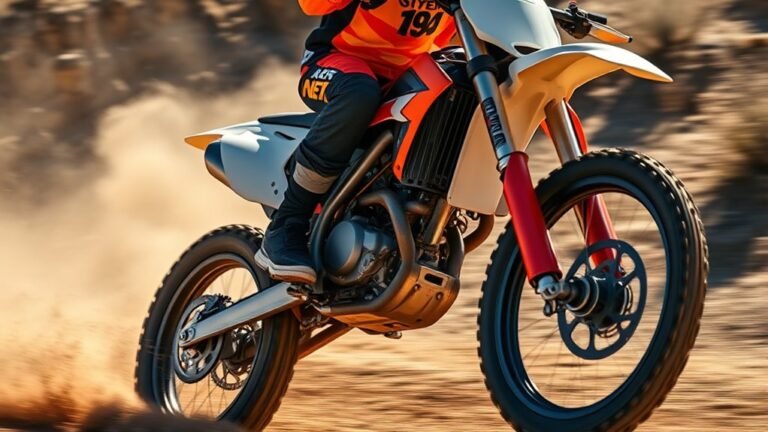
Although you might be new to dirt biking, a 125cc dirt bike offers a perfect balance of power and control. It’s ideal for beginners and light off-road riding.
A 125cc dirt bike strikes the perfect balance of power and control for beginners and light off-road adventures.
The term “125cc” refers to the engine displacement—125 cubic centimeters—which influences the bike’s power and agility. Depending on the model and whether it’s a four-stroke or two-stroke engine, a 125cc dirt bike produces between 15 to 35 horsepower.
This range guarantees you get enough power without sacrificing maneuverability. That’s essential for steering trails or motocross tracks.
Two-stroke engines typically deliver quicker acceleration and higher horsepower, while four-stroke models provide smoother power delivery and better fuel efficiency. The lightweight design and balanced engine specs make 125cc dirt bikes easy to handle.
That helps you build confidence on various terrains. With this blend of features, a 125cc dirt bike is a smart choice if you want a manageable yet capable off-road experience.
How Fast Can a 125cc Dirt Bike Go?
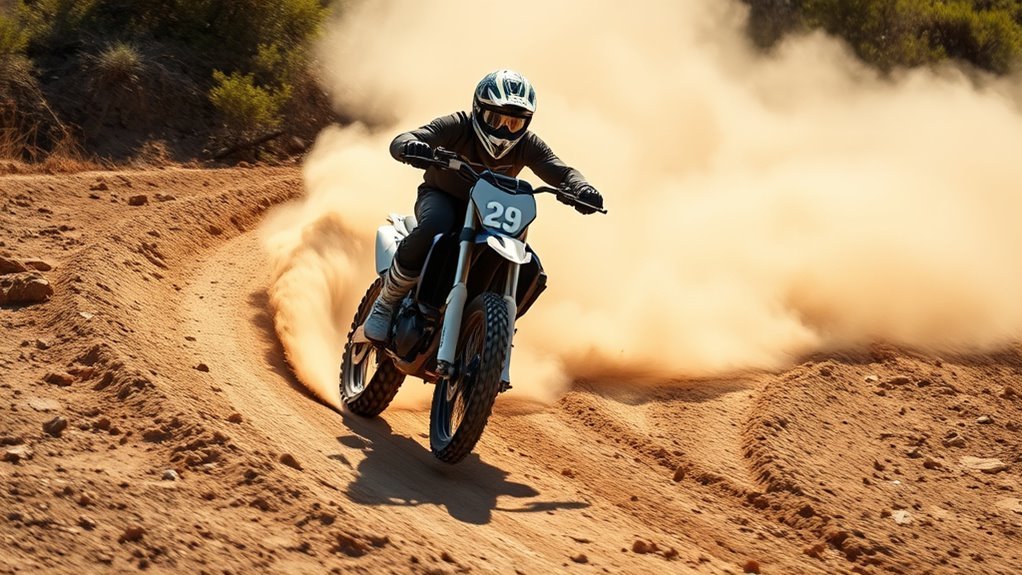
You’ll find that most 125cc dirt bikes reach speeds between 45 and 60 mph, though this varies by model and setup. Two-stroke engines usually hit higher speeds than four-strokes.
Keep in mind, factors like terrain, rider weight, and bike maintenance also play a big role in how fast you can go. So, it’s not just the bike itself that matters!
Typical Speed Range
How fast can a 125cc dirt bike really go? Most models reach a top speed between 45 and 60 mph, depending on engine sizes and design.
Two-stroke 125cc bikes tend to be faster, often hitting up to 62 mph on flat terrain, while four-stroke variants usually top out around 47 to 50 mph. You can push these speeds higher with modifications like sprocket changes and upgraded exhaust systems.
Keep in mind, rider weight and the type of terrain also play a role in the bike’s actual speed. Whether you have a two-stroke or four-stroke engine, understanding this typical speed range helps you set realistic expectations for your riding experience.
Factors Affecting Speed
Since several factors influence a 125cc dirt bike’s speed, you’ll notice differences even among similar models. The engine type, such as two-stroke versus four-stroke, can impact your bike’s top speed.
Modifications like upgrading the air filter or adjusting gear ratios also play a key role. Terrain and rider weight further affect performance—rough trails or extra pounds can slow you down.
Here are five critical factors to take into account:
- Engine type and condition
- Gear ratios and sprocket sizes
- Rider weight and its effect on acceleration
- Terrain and weather conditions
- Modifications, including air filter upgrades
Understanding these will help you maximize your 125cc dirt bike’s speed and overall ride quality. It’s all about knowing what makes your bike tick!
How Do 2-Stroke vs. 4-Stroke Engines Affect Speed?

You’ll notice two-stroke engines crank out more power, letting you hit higher top speeds on a 125cc dirt bike.
Four-stroke engines, on the other hand, focus on torque, giving you smoother control and better handling at lower speeds.
Understanding these differences helps you pick the right bike for your riding style.
Two-Stroke Engine Speed
Although both two-stroke and four-stroke engines power 125cc dirt bikes, two-strokes typically deliver higher top speeds due to their more frequent power cycles. Two-stroke engines produce power once every crankshaft revolution, boosting acceleration and top speeds compared to four-strokes that fire every two revolutions.
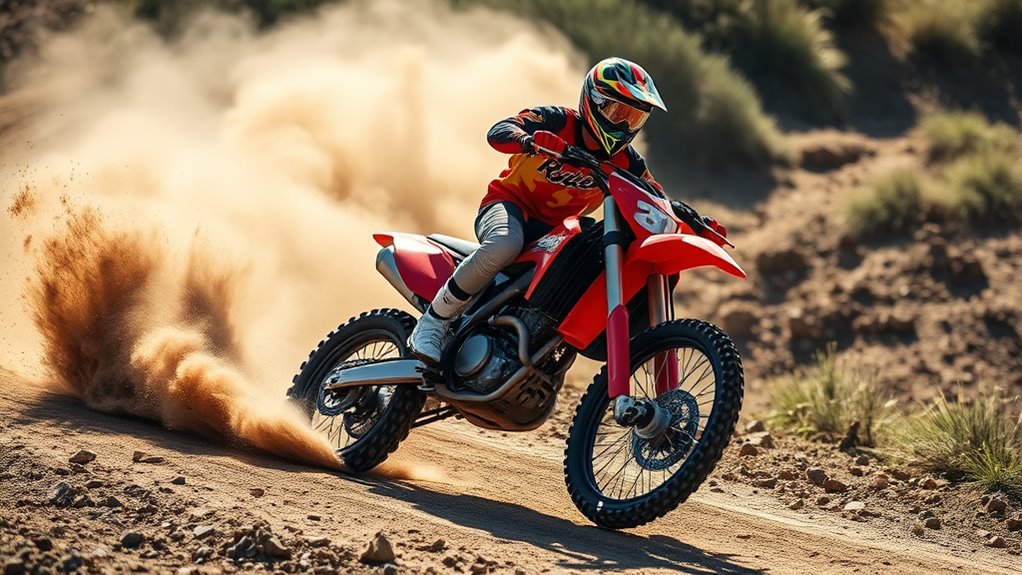
For example, a two-stroke 125cc bike like the KTM 125 SX can reach nearly 100 km/h (62 mph). This really shows the advantage of this engine type in achieving high speeds.
- Two-stroke engines offer quicker power delivery
- Higher top speeds than four-stroke counterparts
- More acceleration due to frequent power cycles
- Efficient use of cubic centimeters for speed
- Preferred for racing and high-speed riding
You’ll notice two-strokes excel when speed is your priority.
Four-Stroke Engine Torque
When comparing two-stroke and four-stroke engines, you’ll find that four-strokes deliver smoother torque and more consistent power. This gives you better control, even if their top speeds are usually lower.
Four-stroke engines provide more low-end torque thanks to their complex engine cylinders and refined engine tuning. This smoother power delivery helps you navigate trails and technical sections with confidence, rather than chasing raw top-end speed.
While two-stroke bikes excel in peak power and quick acceleration, four-strokes focus on manageable torque throughout the RPM range. If you prioritize control over outright speed, four-stroke engines are ideal.
Their balanced torque curve means you won’t be jerking the throttle as much. This makes your ride feel more predictable and steady on varied terrain.
How Gearing and RPMs Affect Your Bike’s Speed
Since gearing directly changes the ratio between your engine’s RPMs and the wheel’s rotation, it plays a crucial role in determining your bike’s speed and acceleration. By adjusting the gear ratio through sprocket size, you can influence how fast your bike’s wheels spin at a given engine RPM.
Gearing adjusts the ratio between engine RPM and wheel rotation, crucial for bike speed and acceleration.
For example, increasing the rear sprocket size or decreasing the front sprocket allows higher wheel RPMs, boosting your top speed. Proper gear selection helps maintain the engine within its ideal RPM range, ensuring efficient power delivery without over-revving.
Additionally, controlling your throttle effectively adjusts engine RPM, helping you reach and sustain higher speeds smoothly.
Key points to consider:
- Gear ratio directly links engine RPM to wheel rotation
- Larger rear sprocket or smaller front sprocket can increase top speed
- Maintaining the best RPM avoids engine strain and maximizes power
- Correct gear selection balances acceleration and speed
- Throttle control fine-tunes RPM for smooth acceleration and top speed
How Rider Weight and Terrain Impact Top Speed
Gearing and RPMs set the foundation for your bike’s speed, but other factors like rider weight and terrain also play a significant role in determining how fast your 125cc dirt bike can go.
Heavier rider weight can reduce your bike’s top speed by about 1-2 mph for every 25 pounds you carry. That means lightweight riders usually enjoy better acceleration and a higher maximum speed due to less overall weight slowing them down.
Terrain also has a big impact. Riding on rough terrain, filled with rocks, roots, or loose soil, increases resistance and can lower your top speed by up to 10-15 mph compared to smooth, flat surfaces.
If you want to hit your bike’s maximum speed, choosing smoother terrain helps a lot. So, keep in mind that both your rider weight and the terrain you tackle directly influence your 125cc dirt bike’s top speed and acceleration.
Easy Upgrades to Make Your 125cc Dirt Bike Faster
If you want to boost your 125cc dirt bike’s speed without major modifications, several easy upgrades can make a noticeable difference. By focusing on key areas like the gear ratio and airflow, you can achieve a solid top speed increase.
Swapping to a smaller rear sprocket or a larger front sprocket adjusts your bike’s gear ratio, pushing speeds from about 55 mph to over 60 mph. Upgrading your air filter and installing a performance exhaust system improves engine breathing and efficiency.
Changing sprockets and upgrading airflow parts can boost your 125cc dirt bike’s top speed above 60 mph.
Reducing weight also helps your bike accelerate quicker and hit higher speeds. Finally, fine-tuning the engine, including jetting and carburetor adjustments, maximizes power output.
Consider these upgrades:
- Smaller rear sprocket for a better gear ratio
- Performance exhaust system for improved airflow
- Air filter upgrade to reduce air restriction
- Weight reduction by removing unnecessary parts
- Engine tuning to optimize fuel mixture
These easy steps can make your 125cc dirt bike noticeably faster.
When Is It Time to Move Up From a 125cc Dirt Bike?
After making easy upgrades to boost your 125cc dirt bike’s speed, you might start wondering when it’s time to move on to something more powerful. You should consider moving up when your bike’s performance limits your riding experience. Especially if you want higher speeds over 70 mph or want to tackle tougher terrain.
When basic control and acceleration become too easy, upgrading to a larger engine, like a 250cc, will enhance your speed and overall performance. Rough trails or steep climbs also signal it’s time for an upgrade.
| Riding Condition | 125cc Dirt Bike | Larger Engine Upgrade |
|---|---|---|
| Speed Range | Up to 60 mph | 70+ mph |
| Terrain Suitability | Moderate trails | Steep, rugged terrain |
| Rider Experience | Beginner to intermediate | Intermediate to advanced |
Listen to your skills and terrain demands to know when to move up for a better ride. It’s all about matching your bike to your growing abilities and challenges!
Frequently Asked Questions
Is a 125CC Good for a 12 Year Old?
Yes, a 125cc dirt bike is great for you if you’re 12, especially with some experience. It’s manageable and adjustable for skill.
Plus, it’s perfect with proper gear and supervision to keep you safe while learning and having fun.
Can a 125CC Go 80 Mph?
You won’t quite feel like a speed demon hitting 80 mph on a 125cc without upgrades.
But if you’re ready to tweak and tune, you can push it close—just watch your safety and sanity.
Can a 125CC Go 100MPH?
You can’t realistically reach 100 mph on a 125cc dirt bike without serious modifications. These bikes aren’t built for that speed, so pushing them that fast would be unsafe.
It would also require extensive engine and component upgrades. So, if you’re thinking about going that fast, be prepared for a lot of work and some risk.
Are 125CC Bikes Fast?
Yes, 125cc bikes can be fast enough for beginners and thrill-seekers alike. They offer a great balance of speed and control.
This lets you enjoy off-road riding without the overwhelming power of larger bikes. So, you get just the right amount of thrill without feeling out of control.
Conclusion
Now that you know how fast a 125cc dirt bike can really go, you’re ready to hit the trails with confidence. Remember, factors like engine type, gearing, and rider weight all play a role in your bike’s speed—like pieces of a puzzle fitting perfectly together.
With a few smart upgrades, you can squeeze even more power out of your ride. When the thrill starts to feel small, it might just be time to move up and chase bigger adventures! Whether you’re racing or just enjoying off-road fun, understanding your bike’s potential helps you get the most out of every ride. So get out there, ride safe, and make the most of what your 125cc dirt bike can offer!