How to Identify the Different Parts That Make Up a Bicycle
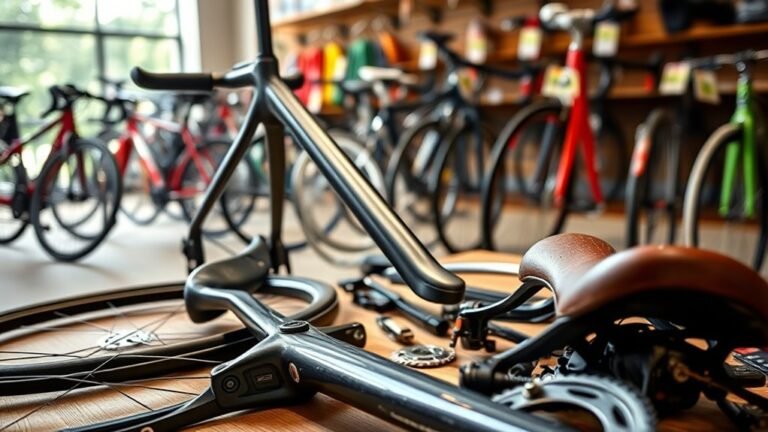
You can identify a bicycle’s parts by starting with the frame, which includes the top tube, down tube, seat tube, and rear triangle connecting the wheels. The frame is basically the skeleton of the bike, holding everything together.
Next, check the wheels made of rims, spokes, hubs, and tires. These parts work together to help you roll smoothly.
Look for the drivetrain with the chain, crankset, cassette, and derailleur that transfer your pedaling power. This is what helps you move forward when you pedal.
Finally, spot control parts like handlebars, brake levers, and shifters for steering and stopping. These let you steer the bike and control your speed.
Keep exploring, and you’ll soon understand how each part works together. Once you know the names and functions, identifying bike parts will become second nature!
Key Takeaways
- Identify the frame by locating the top tube, down tube, seat tube, and rear triangle connecting all parts. These are the main structural elements that hold everything together.
- Recognize wheels by their rim, spokes, hub, and tire components. These parts are essential for movement and stability.
- Spot the drivetrain including the chain, crankset, cassette, and derailleur. They work together to transfer pedaling power and keep you moving.
- Locate control parts like handlebars, brake levers, shifters, stem, fork, and headset. These help you steer and change gears smoothly.
- Identify brake components mounted on hubs or rims. They are crucial for safe stopping and maneuvering when you need to slow down or stop.
Identify Bicycle Frame and Structural Parts
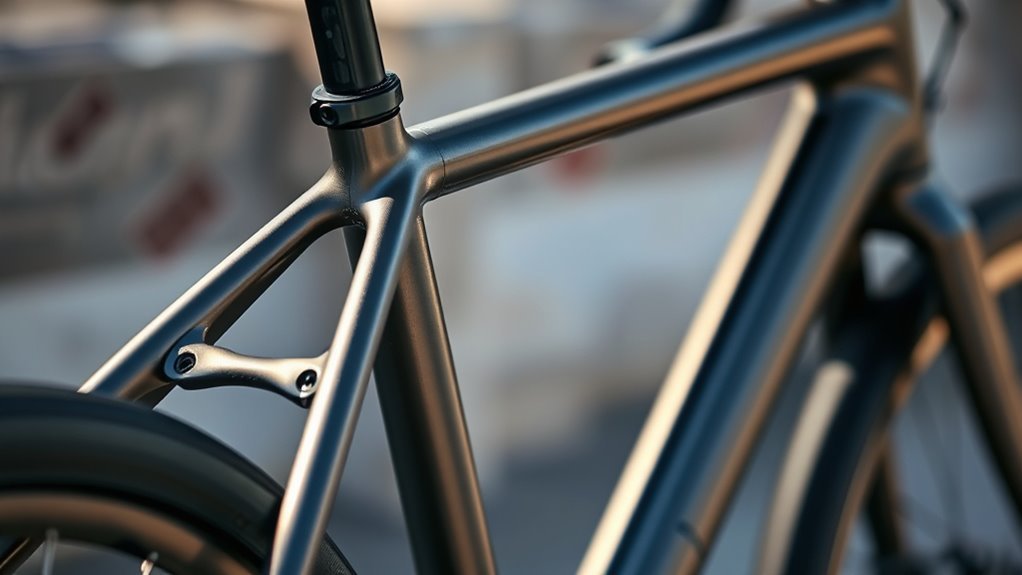
Although bicycle frames come in various materials like aluminum, steel, carbon fiber, or titanium, they all serve as the main structure connecting every part of the bike. When you look at the bike frame, you’ll notice several key structural parts that define its shape and strength.
The top tube runs from the head tube to the seat tube, often influencing your comfort and riding position. Below that, the down tube extends from the head tube to the bottom bracket, providing essential support for pedaling forces.
The seat tube holds the seat post and saddle, adjustable to fit your height. At the back, the rear triangle consists of seat stays and chain stays, connecting the seat tube and down tube to the rear wheel.
Understanding these elements of bicycle anatomy helps you identify how the frame supports the bike’s overall function and durability. It’s pretty cool once you see how everything fits together!
Recognize Bicycle Wheels, Drivetrain, and Control Components
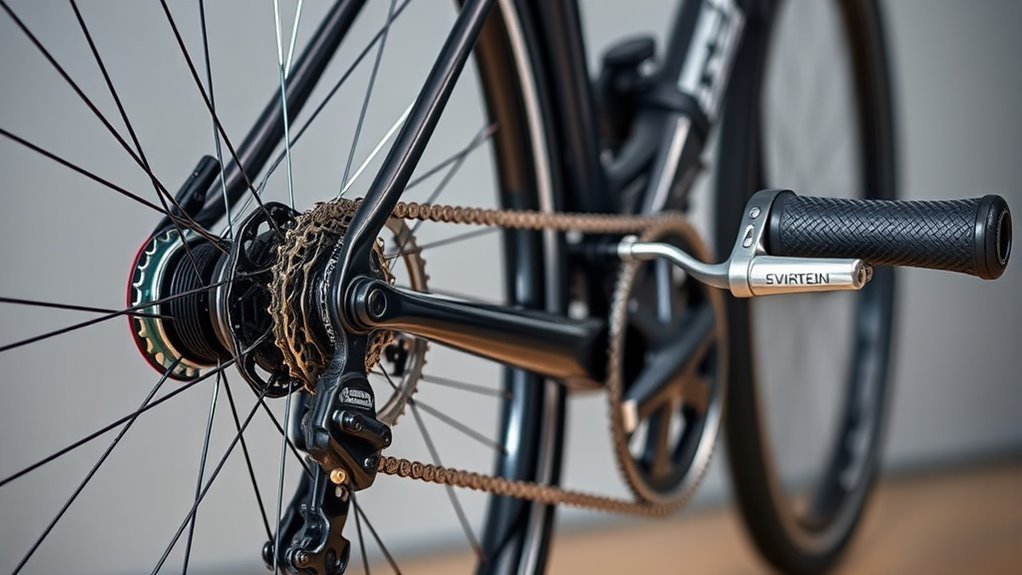
Once you understand the frame’s structure, it’s easier to recognize the components that make your bike move and respond to your commands.
The bicycle wheels include the rim, spokes, hub, and tire. The hub holds bearings and connects the axle to the frame, allowing smooth rotation.
The drivetrain transfers your pedaling power to the wheels, consisting of the chain, crankset, cassette, and derailleur. The crankset turns the chainrings, moving the chain over the cassette’s gears, while the derailleur shifts the chain between them.
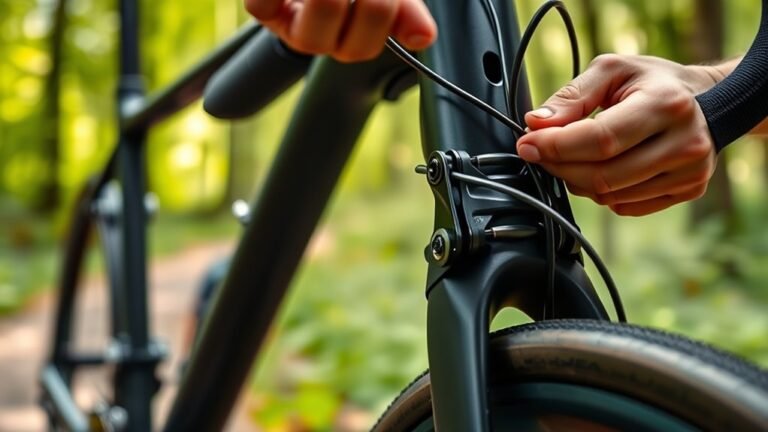
Your brake system, mounted on the hubs or rims, lets you stop safely through brake levers on the handlebars.
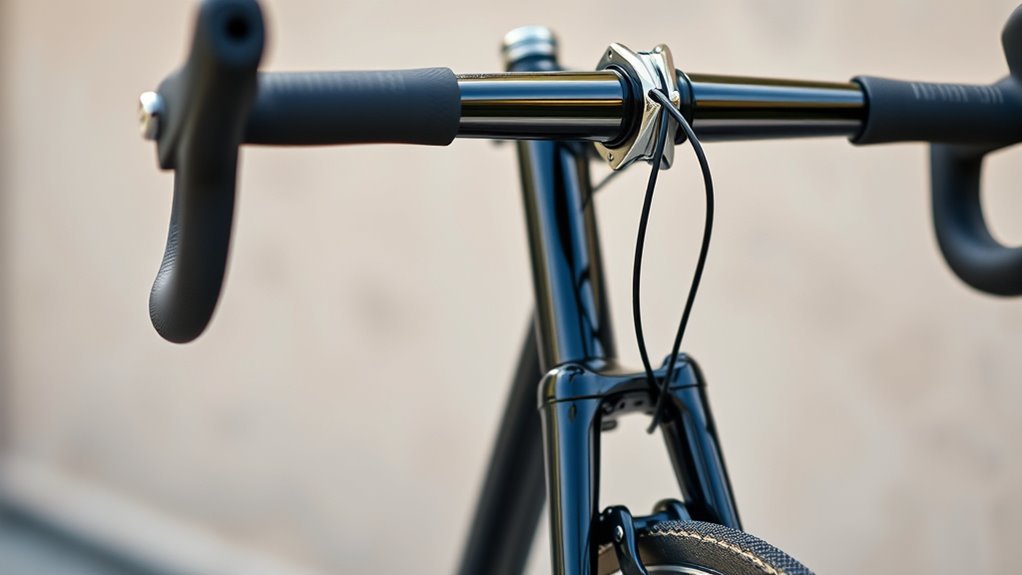
Speaking of handlebars, they are key control components, along with shifters, brake levers, stem, fork, and headset. These parts enable you to steer and change gears efficiently.
Recognizing these parts helps you understand how your bike functions and how to maintain it properly.
Frequently Asked Questions
How to Identify Bike Parts?
You identify bike parts by checking the front fork and looking at the pedals and drivetrain.
Then, examine the handlebars to spot the controls. Inspect the wheels next, focusing on the rims and spokes.
Finally, locate the seat and seat post to understand how everything connects. It’s pretty straightforward once you break it down!
What Different Parts Make up a Bike?
A bike has a frame, wheels, drivetrain, steering system, and brakes. You’ll spot the frame, tires, chain, handlebars, and brake levers—all working together to help you ride smoothly and stay in control.
Each part plays its own role, making sure the bike runs just right. It’s pretty cool how everything fits together so seamlessly!
How to Identify Bike Make and Model?
You can identify your bike’s make and model by checking the logos on the frame. Look closely for model names on the tubes too.
Also, take a good look at any unique design features that might stand out. These can give you clues about the bike’s identity.
If you want to be sure, use the serial number and verify the details with manufacturer databases. It’s a handy way to get accurate information.
Do the Different Parts of a Bicycle Have the Same Job as Each Other?
No, the different parts don’t have the same job. Each one plays a unique role—like the brakes stop you, the handlebars steer, and the chain transfers your pedaling power.
They all work together for a smooth ride. It’s kind of like a team where everyone has their own special part to play.
Conclusion
Now that you know how to spot every part of a bicycle, from the frame to the tiniest control component, you’re basically ready to build a bike with your eyes closed! Imagine yourself assembling a two-wheeled machine that’s so perfectly understood, it could practically ride itself.
With this knowledge, no bike mystery will ever slow you down—you’ll zoom past confusion like a pro. Every ride becomes smoother, and every fix gets faster because you know exactly what makes your bike tick.
Understanding the different parts that make up a bicycle gives you the confidence to tackle maintenance and repairs. Whether it’s adjusting the brakes, tuning the gears, or swapping out a tire, you’ve got the know-how to keep your bike in top shape. So go ahead, hit the road with a clear mind and a sharper eye for your trusty bike’s components!