How to Tighten Bike Brakes in 3 Easy Steps
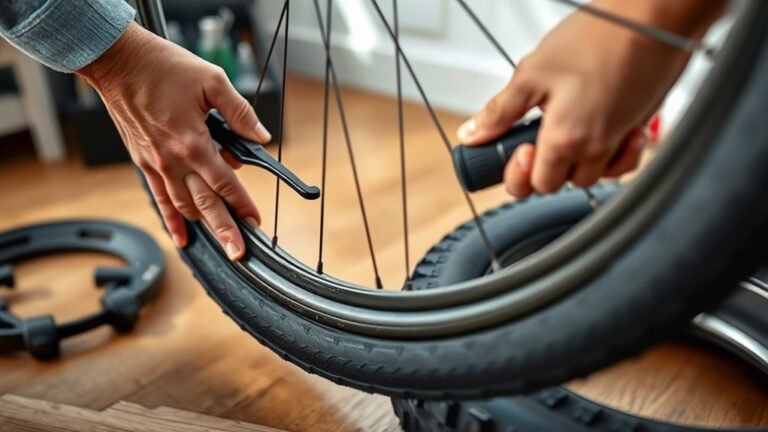
To tighten your bike brakes, start by checking the cables and pads for any damage or wear. Replace any parts if needed to ensure everything is in good shape. This step is crucial for safe and effective braking.
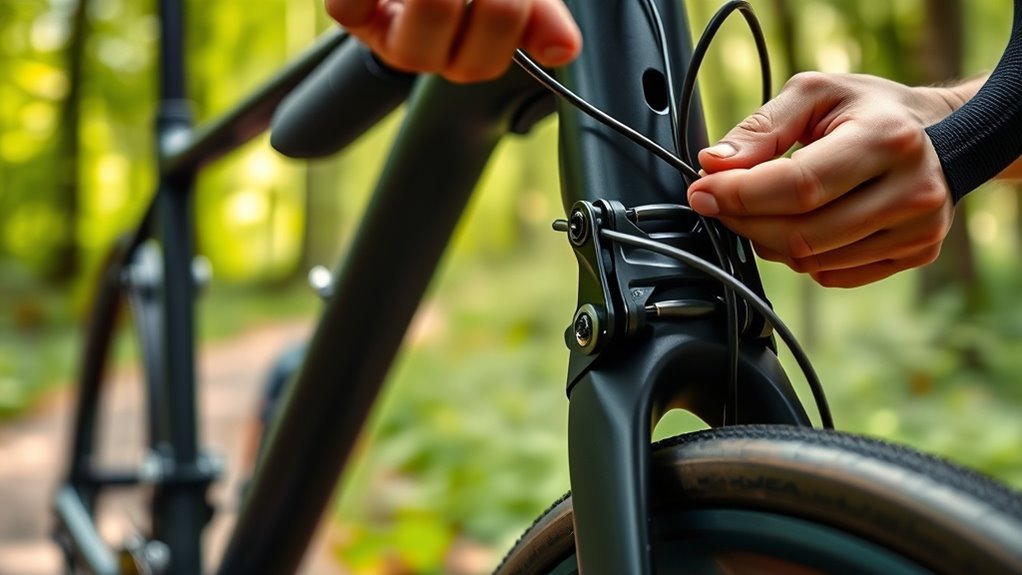
Next, adjust the brake cable tension. You can do this by turning the barrel adjuster or tightening the cable bolt. Keep adjusting until the brake lever feels firm but with minimal slack—this makes your brakes more responsive.
Finally, align the brake pads so they grip the rim or rotor evenly. Make sure they don’t touch the sidewall, as that can cause noise and wear.
After these steps, you’ll enjoy smoother, safer braking. Plus, there are extra tips you can use to fine-tune your brakes even more for the best performance.
Inspect Brake Cables and Pads
Before tightening your bike brakes, inspect the brake cables and pads carefully. Start by checking the brake cables for any frays, rust, or corrosion; damaged cables should be replaced to guarantee safe brake adjustment.
Always check brake cables for frays, rust, or corrosion before tightening your bike brakes.
Next, examine the brake pads—make sure they have at least 3mm of rubber left for effective stopping power. Check the brake pads contact with the rim or disc, confirming they’re properly aligned and not touching sidewalls or debris.
Look for uneven wear or glazing on the pads, which can reduce braking efficiency, and replace them if needed. Finally, verify the brake pads are securely attached to the brake calipers and aren’t loose or wobbly.
Doing these checks makes it easier to adjust the brake lever and maintain a reliable brake system. It’s a simple step that really pays off for your safety and bike performance.
Adjust Brake Cable Tension
While adjusting brake cable tension might seem tricky at first, you can easily improve brake responsiveness by turning the barrel adjuster near the brake lever or caliper clockwise to tighten the cable.
If the barrel adjuster hits its limit, just loosen the lock nut, turn the barrel adjuster clockwise more, then retighten the lock nut. To get the brake adjustment just right, use a wrench to tighten the cable bolt at the brake caliper.
Make sure the brake lever feels firm without too much slack. And don’t forget to check the brake pads and the brake rotor on disc brakes to ensure they’re making proper contact.
- Locate the barrel adjuster near the brake lever or brake caliper
- Turn the barrel adjuster clockwise to increase brake cable tension
- Loosen lock nut if more adjustment is needed
- Tighten cable bolt at the brake caliper with a wrench
- Test brake lever feel and wheel stopping power after adjustment
Align and Test Brake Pads
Once you’ve adjusted the cable tension, you’ll want to align the brake pads so they contact the rim or rotor evenly and effectively. Start by centering the pads in line with the rim or rotor; avoid touching sidewalls or hanging below the rim surface.
Squeeze the brake lever to observe pad contact and adjust the caliper or pads with a Phillips screwdriver. Make sure both pads engage simultaneously and evenly when testing the front wheel. Also, check for debris that might interfere with braking.
| Step | Action | Tip |
|---|---|---|
| Align Pads | Center brake pads on rim | Avoid sidewall or rim overhang |
| Adjust Position | Use screwdriver to realign | Keep pads parallel to rim |
| Test Contact | Squeeze brake lever | Both pads should engage evenly |
| Inspect Debris | Clear any foreign objects | Ensure smooth braking |
Conclusion
By giving your bike brakes a little tender loving care, you’re ensuring smoother, safer rides ahead. Taking the time to inspect cables and pads, adjust tension, and align everything just right transforms your bike’s responsiveness in the most subtle yet effective way.
Remember, a well-attended brake system isn’t just maintenance—it’s a quiet assurance that your journey will be as controlled and confident as you deserve. Keep it gentle, and keep it secure. Tightening bike brakes properly not only enhances safety but also boosts your bike’s overall performance. So, take these simple steps regularly to maintain optimal brake function and enjoy a safer ride every time you hit the road.