
How Much Does a Bike Weigh on Average?
A bike typically weighs between 17 and 30 pounds, depending on its type and the materials used. Understanding how much a bike weighs on average can really help when you’re looking to pick the perfect ride.
Road bikes are lighter, usually around 15 to 20 pounds, making them great for speed and smooth pavement.
On the other hand, mountain and hybrid bikes tend to be heavier because they’re built for durability and rough terrain.
Carbon fiber frames are a game-changer. They help keep the weight low, which improves performance, especially on climbs.
So, if you want to boost your speed or just find the right bike for your needs, knowing why weight matters and how it varies can give you a real advantage.
Key Takeaways
- Average road bikes weigh between 17 and 20 lbs, with high-end models closer to 15 lbs. They’re designed to be lightweight for speed and efficiency.
- Mountain bikes typically weigh from 21 to 28.8 lbs, depending on design and materials. They need to be sturdy enough for rough terrain, so they’re a bit heavier.
- Hybrid bikes generally range from 26 to 32 lbs due to their build and components. They’re kind of a mix between road and mountain bikes, so the weight reflects that.
- Frame material significantly affects weight, with carbon fiber being the lightest option around 18 lbs. It’s popular for those who want a really light bike.
- Bike weight varies widely based on type, frame material, and intended riding purpose. So, it’s good to think about what you need before picking one.
When Bike Weight Really Matters for Performance

When you’re tackling steep climbs or accelerating quickly, bike weight truly matters. A lightweight bike can considerably boost your performance during these vital moments.
In competitive cycling, even shaving off 1 kg from your bike weight can cut seconds off your climbing time, making a noticeable difference on tough ascents. Your total system weight—including you, your gear, and the bike—plays a big role in how efficiently you power through technical mountain biking trails and extended climbs.
This is especially true if you’re riding a race bike designed for speed and agility. The lighter your setup, the better your power-to-weight ratio, which is essential for riders who may not have the highest power output but want to maximize climbing and acceleration.
While bike weight isn’t as important on flat terrain where aerodynamics dominate, it’s clear that when climbing or accelerating, keeping your bike light enhances your overall performance.
How Bike Weights Differ by Type and Material
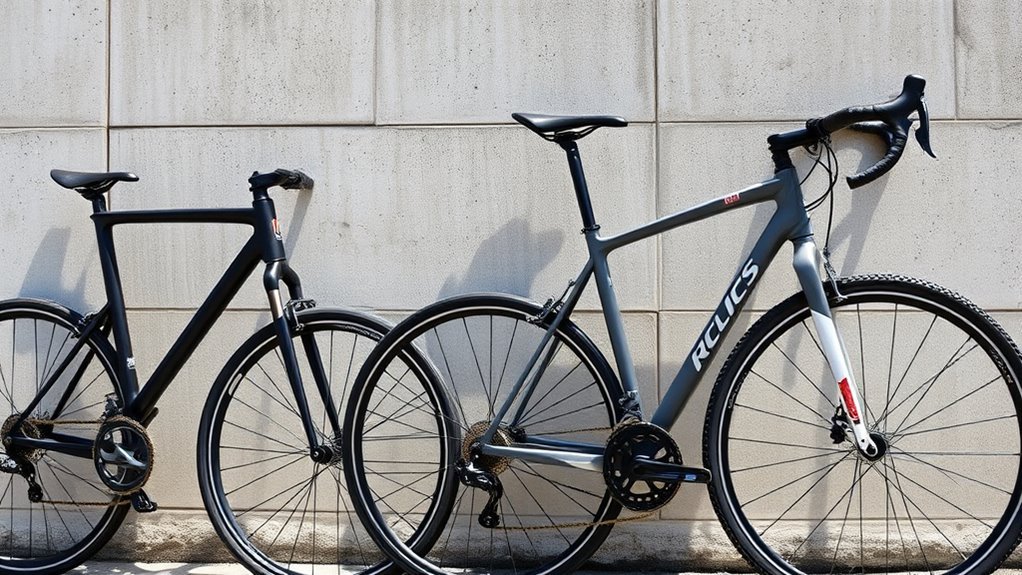
Understanding how bike weight affects your ride means taking a closer look at the types of bikes and the materials used in their construction. Road bikes, for example, have an average weight of 17-20 lbs, with high-end models reaching as low as 15 lbs thanks to lightweight materials like carbon fiber.
Mountain bikes vary more, typically weighing between 21 and 28.8 lbs depending on their frame material and design purpose. Hybrid bikes usually fall between 26 and 32 lbs, influenced heavily by their build and materials.
The frame material plays a huge role in bike weight. Carbon fiber frames are among the lightest, averaging about 18 lbs, while steel frames tend to be heavier, ranging from 22 to 29 lbs.
Aluminum and titanium also offer a balance between strength and weight. By understanding these bike types and materials, you can better choose a bike that fits your needs and riding style.
Frequently Asked Questions
Is a 30 Lb Bike Considered Heavy?
Yes, a 30 lb bike is considered heavy for most types like road and cross-country mountain bikes. You’ll find it’s typical only for downhill or enduro bikes, where extra weight adds durability and control on rough terrain.
That’s because lighter bikes usually make riding easier and faster. But when you need to handle tough trails, the extra pounds help keep things stable and strong. So, it really depends on what kind of biking you’re doing!
Is 27 Lbs Heavy for a Bike?
Think of your bike as a backpack: 27 lbs isn’t a feather, but it’s not a boulder either. You’ll feel the weight, yet it’s manageable—especially if you’re cruising trails or blending city streets with comfort.
It’s kind of like carrying a bit more gear, but nothing that’ll slow you down too much. So, yeah, it’s noticeable, but definitely not a dealbreaker.
Is 20 Pounds Heavy for a Road Bike?
No, 20 pounds isn’t heavy for a road bike. You’ll find that weight pretty lightweight, especially for performance or racing models.
It’s easy to handle and suits competitive or long-distance riding well. So, if you’re worried about the weight, don’t be—it’s actually quite manageable.
Is 22 Lbs Heavy for a Bike?
Yes, 22 lbs is a bit heavy if you’re riding a road bike, but it’s normal for mountain, gravel, or hybrid bikes.
You won’t find it too heavy unless you’re aiming for high-performance racing.
Conclusion
When you choose a bike, remember its weight isn’t just a number—it’s the wind at your back or the anchor holding you down. Lightweight road bikes speed you through city streets, while sturdy mountain bikes carry you over rugged trails.
Knowing how weight varies by type and material helps you pick the perfect ride for your journey. So, grab the bike that feels like an extension of yourself and let every pedal stroke fly like a feather on the breeze.
Understanding the average bike weight is key to finding the right balance between speed and durability. Whether you’re cruising urban roads or tackling off-road adventures, the weight of your bike impacts your overall experience. Keep this in mind when choosing your next bike, and you’ll enjoy smoother, more efficient rides every time.