
How to Use Gears on a Bike in 7 Easy Steps
You’ll use your bike’s 7-speed gears by shifting one at a time for smooth pedaling across all terrains. These gears help you maintain a comfortable cadence whether you’re cruising on flat roads or tackling steep hills. Start in a middle gear on flat ground to get a feel for how your bike responds.
Shift down before hills to ease your effort, and shift up when speeding downhill to keep your momentum. Turning the shifter away from you moves to a higher gear, while turning it toward you shifts to a lower gear.
Pedal steadily while shifting and watch the gear indicator for precision. This helps avoid chain slips and keeps your ride smooth.
Master these simple steps, and you’ll enhance control and enjoy cycling more effortlessly.
Soon, you’ll be exploring further with confidence and ease.
Key Takeaways
– Shift to lower gears (1–3) before hills to reduce pedaling effort and maintain momentum.
It makes climbing easier and keeps you moving without tiring out too fast.
– Use middle gears (around 4) on flat terrain for balanced pedaling and speed.
This helps you ride comfortably without pushing too hard or going too slow.
– Shift to higher gears (5–7) on downhill or flat stretches to increase efficiency and speed.
You’ll get more power and can cruise faster with less effort.
– Pedal steadily and shift one gear at a time, turning the shifter gently until a click confirms the change.
Don’t rush it, or you might damage the gears.
– Anticipate terrain changes and shift gears proactively to ensure smooth transitions and avoid damage.
Planning ahead keeps your ride smooth and your bike in good shape.
Understanding Your 7-Speed Bike Gears

Although it might seem complex at first, understanding your 7-speed bike gears is straightforward once you know how they work. Your bike’s gear system is controlled by a gear shifter located on the handlebar, which adjusts the internal hub mechanism.
Understanding your 7-speed bike gears is simple once you learn how the handlebar shifter controls the internal hub.
This internal hub allows you to shift gears smoothly, even when you’re stationary or not pedaling. The gears range from 1 to 7, with the gear indicator showing your current gear setting.
Shifting gears involves turning the gear shifter to select the desired gear combination. Lower gears make pedaling easier, while higher gears help you ride faster on flat or downhill terrain.
Knowing how to use the gear shifter properly guarantees smooth progression between gears and better control over your ride. Once you’re familiar with the internal hub and gear indicator, shifting gears becomes intuitive and lets you optimize your cycling experience.
When to Shift 7-Speed Gears for Different Terrains
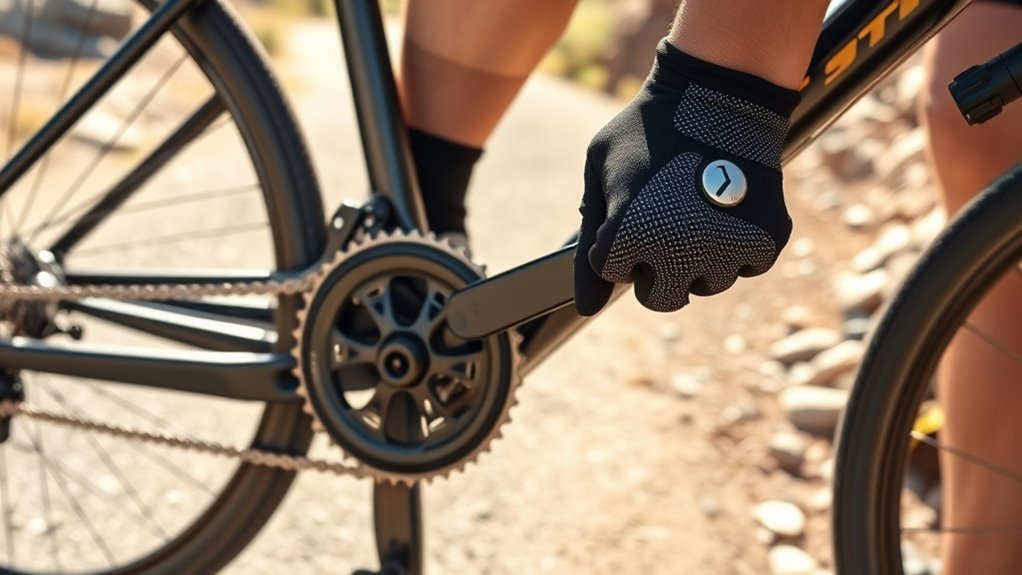
When you ride on varying terrains, shifting your 7-speed bike gears at the right time helps maintain a smooth and efficient ride. Before you tackle steep hills, shift to lower gears (1–3) to make pedaling easier.
On flat terrain, use middle gears (around 4) for balanced effort. When you hit downhill sections or speed up on flat terrain, shift to higher gears (5–7) to maximize efficiency.
Always anticipate terrain changes and shift gears before you reach steep inclines or declines to avoid strain and gear damage. And try to avoid shifting under heavy load or while stationary to keep your gears smooth and lasting.
| Terrain Type | Recommended Gear Range |
|---|---|
| Steep Hills | 1–3 |
| Gentle Slopes | Around 4 |
| Flat Terrain | 4 |
| Downhill Sections | 5–7 |
| Speeding on Flats | 5–7 |
How to Shift Gears Using the Handlebar Shifter

To shift gears using the handlebar shifter, turn the rubber dial away from you to go up a gear and toward you to go down. Make sure you pedal lightly and steadily while shifting to keep things smooth.
Always shift one gear at a time and check the gear indicator to know your current position. It helps you stay in control and avoid any sudden jerks.
Shifter Operation Basics
How exactly do you operate the handlebar shifter to change gears on your bike? Turn the shifter away from you to shift to higher gears and toward you for lower ones.
Push or twist softly until you hear a click—this signals the gear has changed. Always shift while pedaling lightly to guarantee smooth shifting and protect the gear mechanism.
Check the gear indicator to confirm your current gear. Avoid shifting when stationary or under heavy load to prevent damage or slippage.
| Action | Description |
|---|---|
| Turn shifter away | Shift to higher gears |
| Turn shifter toward you | Shift to lower gears |
| Push/twist softly | Hear click for gear confirmation |
| Pedal lightly | Enable smooth gear changes |
| Check gear indicator | Confirm gear position |
Proper Pedaling Technique
Operating the handlebar shifter correctly sets the stage for smooth gear changes, but proper pedaling technique plays a key role in making those shifts effective. To shift gears while pedaling, maintain steady pressure on the pedals without pushing too hard or too lightly.
This proper pedaling ensures consistent gear engagement and prevents chain slip. Always shift one gear at a time and avoid sudden or multiple shifts to protect your drivetrain.
Keep a gentle grip on the handlebar’s non-shifting part for control as you change gears. Remember, you must shift gears while pedaling rather than when stationary.
This pedaling technique helps the gears mesh smoothly and prolongs your bike’s performance, making each ride more efficient and enjoyable.
Gear Direction Explained
When you turn the rubber shifter on your handlebar away from you, it moves your bike into a higher gear. This makes pedaling harder but faster.
To shift into lower gears, simply turn the shifter toward you. This eases pedaling effort and makes it easier to ride uphill or start moving.
The gear shift works by rotating a small part inside the handlebar shifter. This activates the internal hub mechanism.
You don’t need to stop or move the bike to change gears. But it’s best to pedal lightly while shifting for smooth changes and to avoid damage.
Keep an eye on the gear indicator. It shows your current gear and helps you pick the right one for your terrain.
Mastering this gear change makes your ride more efficient and comfortable. Give it a try, and you’ll notice the difference!
Step-by-Step Guide to Smooth Gear Shifting
Before you hit a steep hill or rough terrain, start pedaling lightly and steadily while turning the shifter to change gears smoothly. Proper gear shifting guarantees a comfortable ride and protects your bike’s drivetrain.
Here’s how to do it right:
- Pedal steadily and gently to help the chain move smoothly between sprockets.
- Use the gear indicator to check your current gear and select the right one.
- Shift one gear at a time to avoid chain slips or damage.
- Change gears smoothly by coordinating pedaling and shifter movement.
- Shift before you reach steep inclines or descents to maintain momentum.
Common Gear-Shifting Mistakes to Avoid
Don’t try shifting gears without pedaling—it puts unnecessary strain on your bike’s mechanism. Avoid overloading the gear system by forcing multiple shifts at once, which can cause damage.
Always make sure your gears are properly aligned before you ride to keep everything running smoothly. It really helps to check this regularly, so you don’t run into issues on the road.
Shifting Without Pedaling
Although it might seem convenient, shifting gears without pedaling can cause your bike’s gears to jam or slip, especially if you have an internal hub system. Internal gear hubs rely on pedaling to guarantee smooth gear alignment and prevent gear damage.
When you shift without pedaling, you risk gear slipping and increased wear on components.
To avoid problems, remember these tips:
- Always pedal lightly or stop to shift gears.
- Don’t shift under heavy load, like climbing hills or sprinting.
- Use a consistent cadence to help internal hubs shift smoothly.
- Practice proper shifting technique to maintain gear alignment.
- Avoid forcing the gear lever if you feel resistance.
Following these steps will keep your gears functioning properly and extend their lifespan.
Overloading Gear Mechanism
When you shift gears under heavy load or force the mechanism beyond its limits, you risk causing jams, premature wear, or misalignment in your bike’s internal gear system. Gear overload happens when you shift under load, increasing gear mechanism stress and leading to internal gear damage.
To avoid this, always guarantee proper gear engagement and avoid pedaling too hard during shifts. Maintenance neglect, like failing to lubricate or check alignment, only makes these issues worse.
| Mistake | Consequence |
|---|---|
| Shifting under load | Gear jams and slippage |
| Pedaling too hard | Internal gear damage |
| Forcing shifts | Misalignment |
| Skipping engagement | Premature wear |
| Maintenance neglect | Increased gear overload |
Ignoring Proper Alignment
If you skip proper gear hub alignment, you’ll likely experience slipping gears or rough shifts that disrupt your ride. Proper gear alignment is essential for shifting smoothly and protecting your bike’s internal gears.
Ignoring this can cause gear slips, increased wear, and tough gear engagement. To avoid these issues, focus on aligning the yellow indicator lines on the gear hub and shifter accurately.
You should also regularly check and adjust your derailleur. Ensuring internal gears are well-maintained and properly set is important too.
Make it a habit to conduct frequent gear alignment checks to prevent damage. And if you notice any shifting problems, address them immediately to avoid worsening wear.
Troubleshooting and Maintaining Your 7-Speed Gear System
To keep your 7-speed gear system running smoothly, you need to regularly check and adjust its key components. Start by shifting into the fourth gear and inspecting the gear hub alignment. Use the barrel adjuster to line up the yellow indicator lines precisely.
Next, test the shifter; it should turn smoothly and click easily, showing proper cable tension. If shifting feels sluggish or unresponsive, take a moment to examine the gear cable for slack or wear—tighten or replace it as needed.
Don’t forget to keep the internal gear hub clean and dry to avoid corrosion or mechanical problems caused by dirt and moisture. Regular maintenance also includes lubricating the gear system components according to the manufacturer’s instructions.
Practice Tips to Master Shifting on Your 7-Speed Bike
Mastering shifting on your 7-speed bike takes practice, but focusing on smooth, steady pedaling while changing gears will help you build confidence quickly. To shift gears smoothly, you need to practice shifting regularly, paying attention to how your bike responds at each gear.
Keep a steady cadence as you change gears to avoid jerks that can strain the gear mechanism. Use your gear indicator to know exactly which gear you’re in, helping you anticipate your next move.
Here are some tips to help you practice shifting effectively:
- Shift through all seven gears gradually to feel the difference.
- Change one gear at a time to protect the gear mechanism.
- Practice shifting before hills or rough terrain to maintain momentum.
- Maintain a steady cadence while changing gears for smoother transitions.
- Monitor the gear indicator to build muscle memory for quick shifts.
With these steps, you’ll master changing gears with ease and confidence.
Frequently Asked Questions
How to Use 7 Gear Cycle for Beginners?
Start in a middle gear for balance. Shift to lower gears when climbing hills to pedal easily, and switch to higher gears on flat or downhill for speed.
Pedal smoothly and avoid shifting under heavy pressure. This will help your bike last longer and make your ride feel better. Give it a try, and you’ll get the hang of it in no time!
How Do You Use Gears on a Bike for Beginners?
You use gears by turning the right shifter toward you for higher gears and away for lower. Shift gradually while pedaling lightly, especially before hills, to make pedaling easier and maintain smooth, efficient riding.
It’s best to change gears before you hit a hill or rough patch, so you don’t struggle too much. Just take it slow and steady—no sudden shifts! That way, your ride stays comfortable and smooth.
What Is 1 N 2 3 4 5 Gear Pattern Bike?
The 1-2-3-4-5 gear pattern shows your bike’s gear progression from easiest to hardest. You’ll use lower numbers for climbs and higher numbers for speed.
This helps you shift smoothly and pedal efficiently on different terrains. It’s pretty handy once you get the hang of it!
What Are the 7 Gears on a Bike For?
The 7 gears on your bike help you pedal easier uphill with lower gears and go faster downhill or on flat roads with higher gears.
You’ll adjust them to match your terrain and riding speed effortlessly. It’s pretty simple once you get the hang of it!
Conclusion
Now that you know how to use your 7-speed bike gears, it’s time to hit the road with confidence—no need for a knight’s horse when you’ve got smooth shifting at your fingertips!
Remember to shift gears thoughtfully and avoid common mistakes. Keeping your gear system well-maintained will make a big difference in your ride.
With a little practice, you’ll master the art of effortless riding across any terrain. So, gear up and enjoy the ride like a true cycling champion!
Using bike gears properly helps you ride more efficiently, saves energy, and makes climbing hills easier. Keep practicing shifting your 7-speed bike gears smoothly, and you’ll soon feel more comfortable tackling different surfaces. Whether you’re cruising on flat roads or powering up steep inclines, understanding how to use your bike gears ensures a smoother, more enjoyable ride every time.