
How to Remove Rust From Your Bike in 7 Easy Steps
To remove rust from your bike in seven easy steps, start by gathering household items like baking soda, vinegar, or lemon juice. Don’t forget to wear gloves for safety—it’s a simple way to protect your hands while working on rust removal.
Next, mix your rust removal solution and gently scrub the rusted spots using steel wool or a soft pad. Take your time here; being gentle helps avoid scratching your bike’s surface.
After scrubbing, rinse everything thoroughly and dry completely to prevent more rust from forming.
Now, lubricate all the moving parts to keep them running smoothly and shielded from moisture.
And finally, keep up with regular maintenance to stop rust from coming back.
Follow these steps closely, and you’ll pick up handy tips to keep your bike in top shape for the long haul.
Key Takeaways
– Gather household rust removers like baking soda, vinegar, lemon juice, and abrasive tools like steel wool or soft pads for scrubbing rust spots.
These are easy to find and work pretty well on most rust spots.
– Apply rust removal solution evenly, scrub gently with consistent pressure, and protect surrounding surfaces with masking tape.
Taking your time here helps avoid damaging the paint or other parts.
– Rinse treated areas thoroughly with water, then dry completely using towels or compressed air to prevent new rust formation.
Drying is super important because moisture is the enemy when it comes to rust.
– Inspect all bike parts for moisture or leftover rust, focusing on hidden areas like joints and spokes, before lubrication.
Make sure nothing is missed so your bike stays rust-free longer.
– Lubricate moving parts with bike-specific lubricant, wipe off excess, and store the bike in a dry place to prevent future rust.
A little care goes a long way in keeping your bike running smoothly.
Gather Materials for Rust Removal
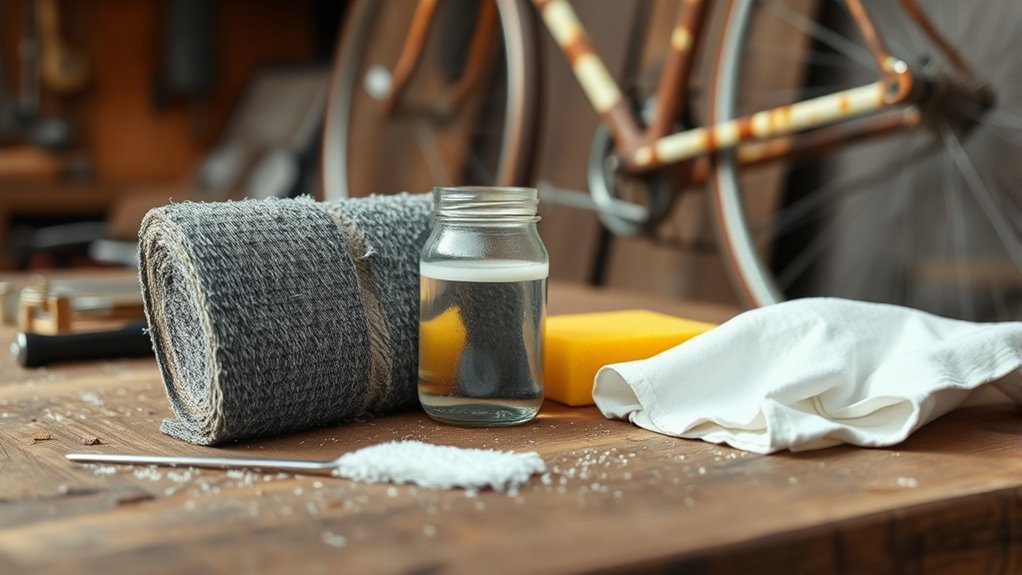
Before you begin removing rust from your bike, gather all the necessary materials to make the process smoother. Start by collecting common household items like baking soda, which works well to loosen rust.
You’ll also want abrasive tools like steel wool; its rough texture helps scrub away rust effectively without damaging the metal underneath. Along with these, prepare clean cloths or old rags to wipe down surfaces as you work.
Don’t forget gloves and eye protection to keep yourself safe during the process, especially when using steel wool or chemical cleaners. Having everything ready before you start saves time and prevents interruptions.
Mix Your Rust Removal Solution
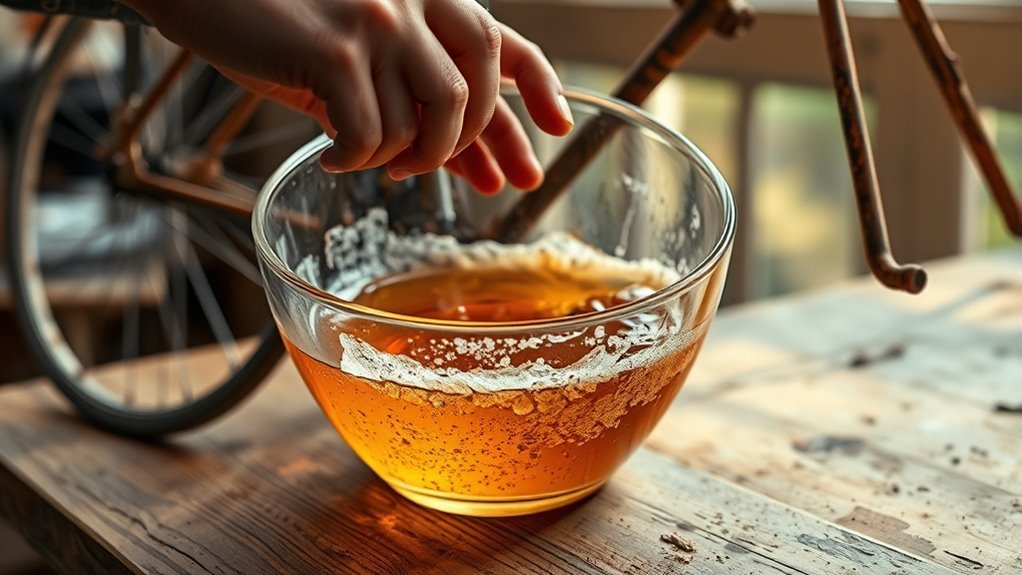
When you blend your rust removal solution, make sure you combine ingredients thoroughly to create an even paste or liquid that will work effectively on your bike’s rusty parts.
You can use baking soda and water for a thick paste or vinegar and Coca-Cola for a liquid solution. Mixing ensures the rust remover covers evenly, maximizing its effectiveness.
Here are some common mixtures to remove rust:
| Ingredients | Form | Purpose |
|---|---|---|
| Baking soda + water | Thick paste | Gentle rust removal |
| Vinegar or Coca-Cola | Liquid | Breaks down rust deposits |
| Lemon juice + salt | Liquid | Natural rust remover |
| Citric acid + steel wool | Paste + abrasive | Enhanced rust removal |
Make sure every solution is well mixed before you apply it. This helps the rust remover work uniformly, making your bike cleaner and rust-free.
Scrub Rusted Areas Carefully
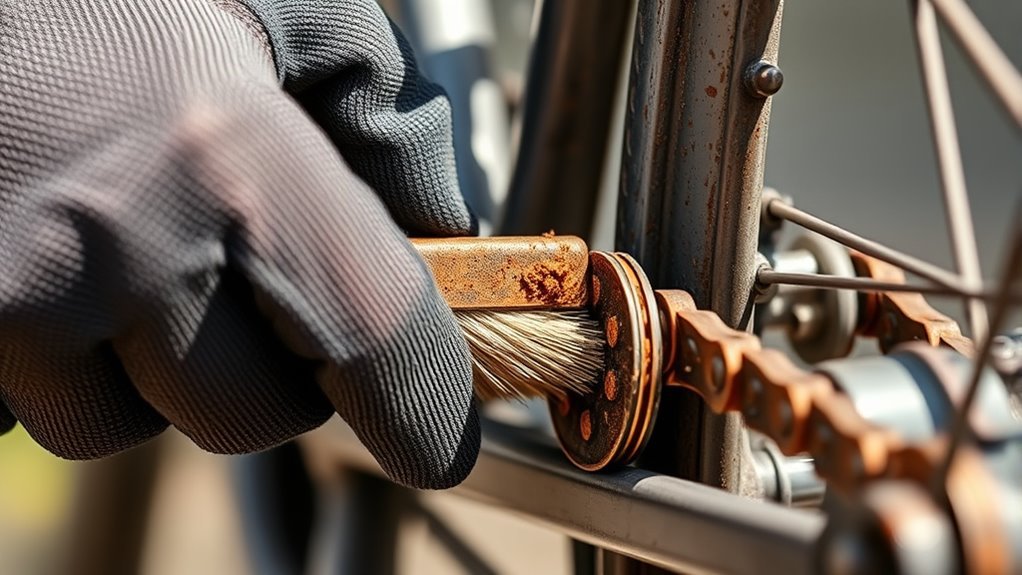
When scrubbing rusted spots, choose a soft-bristled brush or steel wool to avoid harming your bike’s finish. Apply gentle pressure and work in small circles to lift rust without scratching nearby areas.
Be careful and focused during the process to protect the surrounding surfaces. Taking your time really pays off here!
Choose Appropriate Abrasives
Although removing rust can be tough, choosing the right abrasive tools makes the job much easier and protects your bike’s finish. Use a fine-grade steel wool or a soft abrasive pad to scrub rusted spots gently without harming the paint or metal underneath.
Avoid harsh metal tools like wire brushes on delicate or painted parts, as they can cause scratches and worsen corrosion. For tight or detailed areas, try a toothbrush or a small abrasive brush to reach those tricky spots safely.
After scrubbing, always rinse or wipe the area thoroughly to remove any loosened rust particles and prevent further damage. Picking the proper abrasives guarantees effective rust removal while keeping your bike looking great.
Apply Gentle Scrubbing Pressure
Since applying too much pressure can damage your bike’s surface, you should scrub rusted areas with light, consistent force. When you apply gentle scrubbing using steel wool or SOS pads, you effectively loosen rust without harming the underlying paint or metal.
Avoid pressing too hard, as this can gouge or chip the surface, making rust removal harder and potentially stripping protective coatings. If you find the rust stubborn, gradually increase pressure, but stop immediately if you notice any paint removal or surface damage.
Protect Surrounding Bike Surfaces
To protect your bike’s finish, focus your scrubbing only on rusted spots and use a soft cloth or sponge to avoid scratching nearby surfaces. When you need to use abrasive materials like steel wool or SOS pads, carefully limit contact to rusted areas.
To protect surfaces further, apply masking tape around these spots before you start scrubbing. This simple step prevents accidental damage to paint or other sensitive parts.
After scrubbing, rinse the area thoroughly to wash away rust particles and cleaning agents that might harm adjacent surfaces. Finally, dry your bike completely to stop moisture from spreading rust to unaffected areas.
Rinse Off Rust Residue Completely
Now that you’ve scrubbed away the rust, it’s essential to rinse your bike thoroughly with clean water to remove all acid residues. Pay close attention to joints and crevices where chemicals or debris might hide.
After rinsing, make sure to dry every part completely. This helps prevent new rust from forming, and keeps your bike looking great.
Thorough Water Rinsing
How thoroughly do you rinse your bike after applying rust remover? Proper rinsing is essential to wash away all rust residues and prevent chemical damage to your bike parts.
Use plenty of clean water and a water-soaked cloth or sponge to wipe down every treated surface. Don’t forget to focus on crevices and joints where rust residue often hides and can be tough to remove.
After rinsing, dry your bike completely with a dry towel or compressed air to stop moisture from triggering new rust. Thorough water rinsing not only removes harmful chemicals but also preps your bike for the next steps, like lubrication.
Taking time with rinsing helps protect your bike’s metal and keeps it rust-free longer. So, don’t rush it — a good rinse really pays off!
Acid Residue Removal
Because acid residues can continue corroding your bike’s metal and paint, you need to rinse them off completely after using rust removers. To remove acid residue effectively, use water-soaked paper towels or a gentle spray to rinse every surface thoroughly.
Pay special attention to crevices and joints where acid residue may collect, ensuring no spots are missed. Incomplete rinsing can leave acid behind, causing ongoing corrosion and weakening your bike’s metal parts.
After rinsing off the acid residue, dry the bike promptly with a clean towel to avoid moisture buildup. Taking these steps helps protect your bike from further damage and keeps it in good condition after rust removal.
Always remember: a complete rinse is *essential* to prevent future rust.
Complete Drying Process
Where should you focus when rinsing off rust residue? You need to thoroughly clean the rusted area with clean water right after applying the rust remover. This guarantees all chemical residues wash away completely.
Use a damp cloth or sponge to wipe off any lingering rust particles and debris. Make sure water reaches every crevice and internal part to avoid leftover rust or chemical buildup.
After rinsing, dry your bike completely using a clean towel or compressed air. Moisture left behind can cause rust to return, so removing it is essential.
Finally, inspect the treated area carefully to confirm no water or residue remains before applying any lubrication or protective coatings. This complete drying process helps you effectively remove rust and protect your bike.
Dry Your Bike Thoroughly
Once you’ve finished cleaning or riding in wet conditions, you’ll want to dry your bike thoroughly to prevent rust from forming. Use a clean, dry microfiber cloth or towel to wipe down every part of your bike, focusing on joints, bolts, and seals where moisture tends to hide.
Don’t forget hidden spots like under the frame or inside the spokes. If you have compressed air, use it to blow out water from hard-to-reach areas, or gently brush them to remove lingering moisture.
Make sure no water remains on metal surfaces before storing your bike or applying any lubricants. Regularly inspect your bike for dampness, especially after rides in rain or through puddles, and dry it again if necessary.
Staying vigilant about drying will help prevent oxidation and keep rust at bay, ensuring your bike stays in great shape longer.
Lubricate Moving Parts to Protect Them
To keep your bike running smoothly and prevent rust from returning, you should lubricate all the moving parts after cleaning and drying. Proper lubrication creates a protective barrier that blocks moisture and stops further oxidation.
Use a high-quality bike-specific lubricant or chain lube foam to assure deep penetration and lasting protection. Focus on key areas like the chain, gears, cables, and derailleur pivots.
After applying lubricant, wipe off excess to avoid attracting dirt and grime, which can speed up rust formation.
| Bike Part | Lubrication Tip |
|---|---|
| Chain | Apply lube evenly, wipe excess |
| Gears | Lubricate teeth and pivots |
| Cables | Lubricate inside cable housing |
| Derailleur Pivots | Use precision applicator |
| General Frame | Avoid lubricant on paint surfaces |
Consistent lubrication after each clean or wet ride extends your bike’s lifespan and keeps it rust-free. It’s a simple step that really pays off in the long run.
Maintain Your Bike Regularly to Prevent Rust
Keeping your bike lubricated after cleaning helps protect its moving parts, but regular maintenance goes beyond that.
To maintain your bike and prevent rust, start by washing it with soap and water regularly. This removes dirt and moisture that encourage rust formation.
After cleaning, apply a thin layer of lubricant or oil to all metal parts; this creates a protective barrier against moisture.
Make it a habit to inspect your bike often, catching small rust spots early so you can treat them before they spread and cause serious damage.
Also, store your bike in a dry, sheltered place to reduce exposure to rain and humidity, which speed up rust development.
Periodically reapply protective coatings or oils to keep your bike’s metal components in good shape.
Frequently Asked Questions
What Is the Easiest Way to Remove Rust Quickly?
The easiest way to remove rust quickly is by applying penetrating oil like WD-40 and scrubbing with steel wool. It loosens rust fast, letting you clean your bike effortlessly without harsh chemicals or long soaking times.
Seriously, it’s a quick fix that saves you a bunch of hassle. No need to wait around or deal with messy, strong cleaners. Just spray, scrub, and you’re good to go!
Will WD-40 Remove Rust From a Bicycle Chain?
WD-40 will act like a gentle rain, washing away surface rust on your bike chain. It loosens grime but won’t fight future rust, so you’ll need to re-lubricate for smooth, lasting performance.
Think of it as a quick fix rather than a long-term solution. After using WD-40, make sure to apply a proper lubricant to keep your chain running smoothly and prevent rust from coming back.
Can Vinegar Remove Rust From Bikes?
Yes, vinegar can remove rust from bikes. You can soak small parts or apply it directly, then scrub with a brush or tin foil.
Just be sure to rinse thoroughly afterward to prevent acid damage. It’s a simple and effective method if you want to get rid of rust without harsh chemicals.
What’s the Best Rust Remover for Bikes?
The best rust remover for your bike depends on how bad the rust is. For light rust, citric acid works great.
If you’re just doing some general cleaning, WD-40 is a solid choice. But when the rust is heavy, naval jelly is the way to go—just be careful when handling it.
For the best results, try combining these removers with some abrasives. It really helps get the rust off more effectively.
Conclusion
By following these simple steps, you’ll transform your rusted bike into a shining steed ready for new adventures. Like a blacksmith breathing life back into a forgotten sword, you’re not just cleaning metal—you’re restoring freedom on two wheels.
Keep your bike well-loved and maintained, and it’ll carry you through countless journeys, rust-free and ready to roll. Regular care helps prevent rust build-up and keeps your bike looking great.
Your efforts today guarantee every ride feels like a fresh breeze on an open road. Removing rust from your bike isn’t just about appearance—it’s about safety, performance, and prolonging your bike’s life. So, take these steps to heart, and enjoy smooth, rust-free rides for many miles to come.