

7 Easy Steps to Shift Gears on a Bike
To shift gears smoothly on your bike, start by anticipating terrain changes and easing pedal pressure before shifting. This helps prevent chain slips and keeps your ride comfortable.
Using the front derailleur lets you make big adjustments, while the rear derailleur is perfect for fine tuning your gear selection.
Shift early—about 10-15 meters before you hit a hill—to maintain your cadence and momentum. Trust me, it makes climbing feel a lot easier.
Also, avoid cross chaining by pairing compatible gears; this protects your drivetrain from unnecessary wear.
Pedal lightly during shifts to keep everything running smoothly. Don’t forget to keep your chain clean and your derailleurs properly adjusted for the best performance.
Follow these simple steps, and you’ll soon find yourself mastering efficient, effortless gear changes every time you ride.
Key Takeaways
- Anticipate terrain changes and shift gears early to keep your pedaling smooth and maintain momentum.
- Lighten pedal pressure before shifting to reduce strain on the drivetrain and avoid chain slip.
- Use the front derailleur for major gear changes. The rear derailleur is great for fine tuning your gears.
- Avoid cross chaining by pairing compatible front and rear gears. This helps protect your drivetrain.
- Regularly clean and lubricate the drivetrain. Also, make sure to adjust the derailleurs for smooth and reliable shifting.
Understanding Your Bike’s Gear Setup
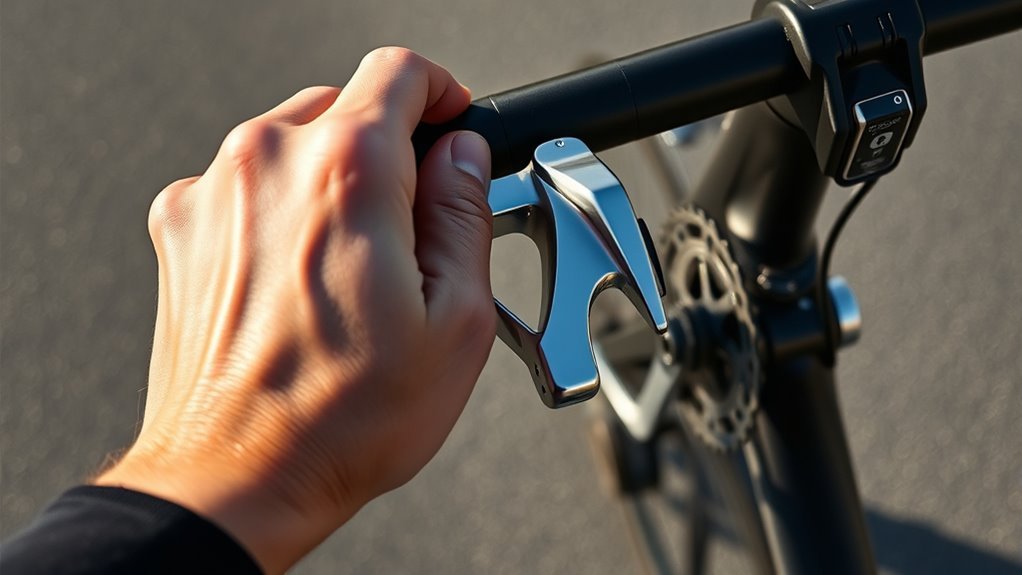
Before you start shifting gears, it helps to understand how your bike’s gear setup works. Most bikes have between one and three front chainrings, with two being a popular choice for balancing speed and ease of use.
The front derailleur moves the chain between these chainrings. This lets you switch between easier pedaling on smaller rings and faster speeds on larger ones.
Meanwhile, the rear cassette has 8 to 12 sprockets, offering a wide range of gears to fine-tune your pedaling resistance. The rear derailleur shifts the chain across these sprockets, giving you more precise control over your effort.
This gear setup allows you to adjust efficiently whether you’re climbing hills or cruising flat terrain. Bikes with fewer front rings simplify shifting and maintenance, but the combination with the rear cassette provides a broad range of gears to suit different conditions and riding styles.
Understanding this system sets you up for smoother gear changes ahead. It’s pretty handy once you get the hang of it!
How to Use Front and Rear Gear Shifters Correctly
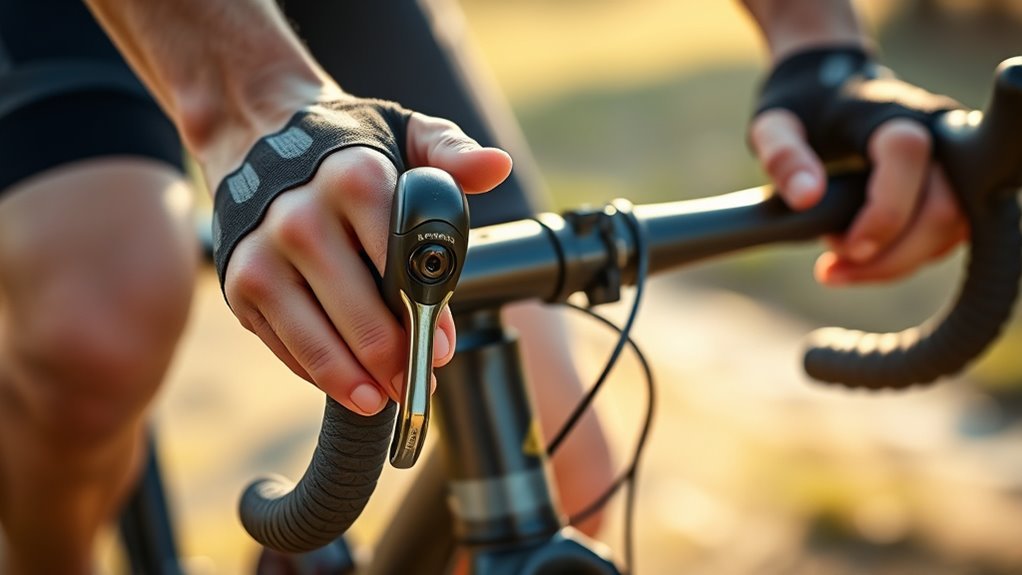
You’ll use your left hand to control the front shifter, moving the chain between larger gear jumps on the chainrings. Your right hand handles the rear shifter for finer adjustments across the cassette.
Mastering how to coordinate both shifters smoothly will keep your ride efficient and comfortable. It might take a little practice, but once you get the hang of it, shifting gears will feel natural.
Left Hand Front Shifter
How do you control the front gears on your bike? You use the left hand front shifter to move the chain between different front chainrings.
To shift gears, push the left shifter right to step down to a smaller, easier chainring, or left to step up to a larger, harder one. Always shift the front shifter while pedaling steadily, and lighten pedal pressure slightly before shifting to avoid chain derailment.
Practice helps you get a feel for the right timing and force when shifting the front derailleur.
- Use your left hand to operate the front shifter smoothly.
- Shift gears gradually, stepping between chainrings carefully.
- Avoid shifting under heavy load for smooth transitions.
Right Hand Rear Shifter
Once you’ve mastered shifting the front gears with your left hand, it’s time to focus on the rear shifter controlled by your right hand. Use your thumb or index finger to operate the rear shifter, which controls the rear derailleur and cogs.
Push the shifter upward to move to a larger rear cog, making pedaling easier for climbs or slow speeds. To increase speed on flat or downhill sections, push the shifter downward to shift to smaller cogs.
Always shift gradually and smoothly, applying light pressure to avoid chain slip or derailleur misalignment. And remember, keep your pedaling pressure steady while shifting to ensure smooth changes and prevent drivetrain issues.
Mastering the right hand rear shifter lets you fine-tune your ride effortlessly. You’ll find it becomes second nature before you know it!
Coordinated Shifting Techniques
Although shifting each derailleur separately is important, coordinating your front and rear shifters is crucial to smooth, efficient gear changes. Use the left shifter to move the chain between front chainrings for major gear changes, while the right shifter fine-tunes the rear cassette.
Shift the front derailleur early before steep climbs to keep the chain running smoothly and avoid rub. Pedal lightly before shifting to reduce drivetrain strain.
Keep these shifting techniques in mind: Avoid cross chaining by not pairing the largest front chainring with the smallest rear cog, and vice versa.
Shift gradually and never under heavy load to maintain proper chain tension. And remember, coordinate front and rear shifts to ensure seamless gear changes without disrupting your rhythm.
When Should You Shift Gears?

You should shift gears before the terrain changes to keep your pedaling smooth and steady. Anticipate hills early so you can adjust without losing momentum.
Staying aware helps you maintain a consistent cadence and ride more efficiently. It’s all about being a little ahead of the game. That way, your ride feels easier and more enjoyable.
Recognizing Terrain Changes
How do you know when it’s time to shift gears while riding? Recognizing terrain changes is key. You want to anticipate shifts early to keep your ride smooth and efficient.
When you spot a hill or feel resistance increase, it’s time to downshift to easier gears. This reduces strain on your legs and keeps momentum going.
Watch for these cues to shift gears effectively: notice upcoming inclines or rough patches and shift before you reach them.
Pay attention to changes in pedaling effort or speed—both signal terrain shifts. Downshift when facing hills or headwinds to conserve energy and maintain cadence.
Maintaining Steady Cadence
When should you shift gears to keep your pedaling smooth? You want to maintain a steady cadence between 80-90 rpm on flat terrain for the best efficiency.
If your cadence drops below 70-80 rpm, it’s time to shift gears early before the pedaling feels heavy. This helps you keep momentum without straining your legs.
When climbing, shift to easier gears to prevent your cadence from falling under 60 rpm. Avoid shifting when pedaling too hard or at very high cadence, as it can strain your chain.
Use your cadence as a reliable gauge—if it dips considerably, shift to a lower gear to regain a steady rhythm. Maintaining this balance lets you enjoy smoother rides and better control.
Anticipating Hill Approaches
Maintaining a steady cadence on flat terrain sets a strong foundation for smooth gear changes as the road changes. When you anticipate hill approaches, it’s essential to shift gears early—about 10-15 meters before the incline.
This lets you downshift gradually, keeping your momentum and avoiding sudden chain slips. Don’t wait until you’re struggling uphill; pre-shifting conserves energy and helps maintain that steady cadence.
Use what you know about the hill’s steepness to pick the right gear before climbing. After cresting the hill, shift back to harder gears to ride efficiently on flats or descents.
- Shift gears early to keep momentum
- Downshift gradually to prevent chain slips
- Maintain steady cadence by anticipating the hill
How to Shift Gears Smoothly Without Losing Cadence
Although shifting gears might seem straightforward, doing it smoothly without losing your cadence takes practice and attention. To achieve smooth shifting, you need to ease your pedal pressure just before you move the shifter. This prevents chain slip and keeps your momentum steady.
Maintaining a consistent cadence, usually around 80-90 RPM, helps you change gears without breaking your rhythm. Make it a habit to shift early when you anticipate changes in terrain. By shifting into easier or harder gears ahead of time, you avoid sudden jolts that can disrupt your cadence.
When shifting to smaller gears, lighten your pedal pressure immediately. And when moving to larger gears, increase pressure slightly to keep things smooth. Practicing these steps while pedaling consistently will build muscle memory, making your gear changes seamless.
With time, you’ll master the art of smooth shifting, keeping your cadence steady and your ride enjoyable. It just takes a bit of focus and some practice!
Avoiding Cross Chaining to Protect Your Drivetrain
Mastering smooth gear shifts goes beyond timing and cadence—you also need to pay attention to which gear combinations you use. Cross chaining happens when your chain runs at an extreme angle, like riding in “big/big” or “small/small” gear combos. This puts unnecessary stress on your drivetrain.
Smooth shifting requires mindful gear pairing to avoid cross chaining and protect your drivetrain from damage.
That can cause faster wear and even potential failure of components. To protect your bike, avoid these combos and shift gears thoughtfully.
Keep these tips in mind to prevent cross chaining:
- Use a smaller chainring with larger rear cogs when climbing.
- Choose a larger chainring with smaller rear cogs on flat or downhill terrain.
- Shift early and smoothly to avoid sudden, extreme gear combos.
Using the Front Derailleur Trim Feature to Prevent Chain Rub
When you shift between the largest and smaller chainrings, using the front derailleur trim feature helps you fine-tune the derailleur’s position to stop chain rub and noise. This trim function makes micro-adjustments, aligning the chain precisely during gear shifts.
It’s especially useful in cross-chaining scenarios like big/big or small/small gear combos. By pressing the trim buttons on your shifter, you can reduce chain rub, ensuring quieter, smoother rides and extending your drivetrain’s lifespan.
Here’s a quick look at how trim helps:
| Situation | Trim Action | Result |
|---|---|---|
| Largest to smaller ring | Slight derailleur trim | Stops chain rub |
| Cross-chaining combo | Adjust trim as needed | Reduces noise |
| Regular gear shifts | Use trim consistently | Prolongs drivetrain life |
Use the front derailleur trim feature regularly to enjoy seamless gear shifts without annoying chain rub. It’s a simple step that really makes your ride smoother and quieter.
Troubleshooting Common Gear Shifting Problems
Using the front derailleur trim feature can solve many minor shifting issues, but sometimes problems like chain slipping, grinding noises, or difficulty changing gears still pop up. When the chain slips, your derailleur might be misaligned, or the cable tension could be too loose.
The front derailleur trim helps minor issues, but slipping, grinding, or tough shifts may signal alignment or tension problems.
Grinding sounds usually mean the derailleur isn’t adjusted correctly or you’re cross-chaining. If shifting feels tough, cable friction, dirt buildup, or worn derailleur parts could be the cause.
To troubleshoot common gear shifting problems:
- Check and adjust derailleur alignment and cable tension to prevent chain slipping.
- Avoid cross-chaining and make sure limit screws are set to stop the chain from dropping off.
- Clean and lubricate your chain and cables regularly to reduce friction and maintain smooth shifts.
With proper derailleur adjustment and maintenance, you’ll enjoy a smooth, reliable gear shift every ride.
Frequently Asked Questions
How to Make Bike Gears Easier to Shift?
You can make bike gears easier to shift by lightening pedal pressure before shifting, keeping your chain clean and lubricated, and shifting gradually. This reduces strain on the drivetrain and prevents chain slipping or noise, ensuring smoother changes.
It’s all about being gentle and patient with your bike. When you ease up on the pedals and move through the gears step by step, your bike thanks you with a smoother ride. Plus, a clean and oiled chain makes a big difference!
How Do Beginners Shift Gears on a Bike?
You start by pedaling steadily and easing pressure on the pedals before shifting with the right shifter to change rear gears smoothly.
Try practicing in flat areas first. It helps you get used to the feel of shifting without too much hassle.
Shift early when you see hills coming up so you don’t struggle later.
And remember, use the front gears only when necessary—they can be a bit trickier to handle.
What Is the 75% Rule in Cycling?
Don’t wait until you’re exhausted—shift gears when your cadence hits 75% of your max.
You’ll keep pedaling smooth and save energy, avoiding burnout while climbing or sprinting.
It’s all about riding smarter, not harder.
How to Ride a Bike With Gears for Beginners?
To ride a bike with gears, start in a middle gear. Pedal smoothly, and shift gears gradually when needed.
Try practicing shifting while stationary first. It helps you get a feel for how the gears work.
Remember to ease pedal pressure when you shift. This makes the change smoother and protects your bike.
Keep a steady cadence as you ride. It’ll help you stay comfortable and ride more efficiently.
Conclusion
Now that you know your bike’s gear setup, practice using both shifters confidently. Shift gears when needed, and make sure to shift smoothly to keep your cadence. Also, avoid cross chaining to protect your drivetrain from unnecessary wear.
Use the front derailleur trim to prevent chain rub, and troubleshoot any problems promptly. Getting familiar with these small adjustments can make a big difference in your ride.
By understanding, practicing, and maintaining your gear system, you’ll ride more efficiently and enjoy every trip more. Keeping your bike’s gears in good shape helps you shift smoothly and keeps your bike running longer. So, keep shifting, keep riding, and keep improving your cycling skills!